Lifestyle Design 101: Moving to Costa Rica.
By Slavica Zlatar-Banika

Table of contents
Lifestyle Design 101: Moving to Costa Rica.
→ Introduction
→ Q&A. The Lifestyle: aka ‘The Fun Stuff’
→ Why move to Costa Rica?
→ A day-in-the-life
→ Healthy, balanced lifestyle
→ Social Life. Culture. Integration.
→ Experiences.Things to consider.
→ Q&A. The Practicalities: aka ‘The Boring Stuff’
→ Visa, taxes, citizenship, legalities, healthcare
→ Money, money, money. Remote work.
→ Conclusion
Introduction

Design your life: → Get it on Amazon
I always like to learn from the best.
As a designer, working with marketing virtuoso Leya Abramson-Witz has always been great.
Not only does she have marketing savvy, an amazing aesthetic and design sense, but she also possesses poise and beauty — inside and out.
And, unknown to even herself maybe — she is also what I would call — a Lifestyle Design master.
She walks the walk.
She proved this recently by taking off to Costa Rica with her beautiful family — to live a well-designed life — aka the Pura Vida.
I needed to hear more, so I asked a lot of questions. And Leya, being Leya, graciously shared her story in detail.
So, let’s dive in — and learn from a master.
Q&A.
The Lifestyle: aka ‘The Fun Stuff’
Q1. What inspired you to move to Costa Rica from Canada? And, how’s it been so far?

The backstory.
Like most people in Toronto — we had a hard time during the extended lockdowns of the pandemic.
When summer 2021 rolled around, summer camp for the kids seemed like a no-go.
We scrambled to find an option that would work for our kids and allow us to work.
I was the CMO of a Canadian beauty bar franchise at the time. My husband, Greg Witz, owned his own training and development company and was completely remote. So, we began the search for where to go with the kids for the summer holiday.
San Diego, California, seemed like a good option. But, staying there for an extended time was expensive.
One day, I threw out the idea of Costa Rica. We had visited it once ten years before on our honeymoon and loved it — so much so that I joked about packing everything up and moving there — long before the pandemic. I stumbled upon a great Airbnb, and off we went.
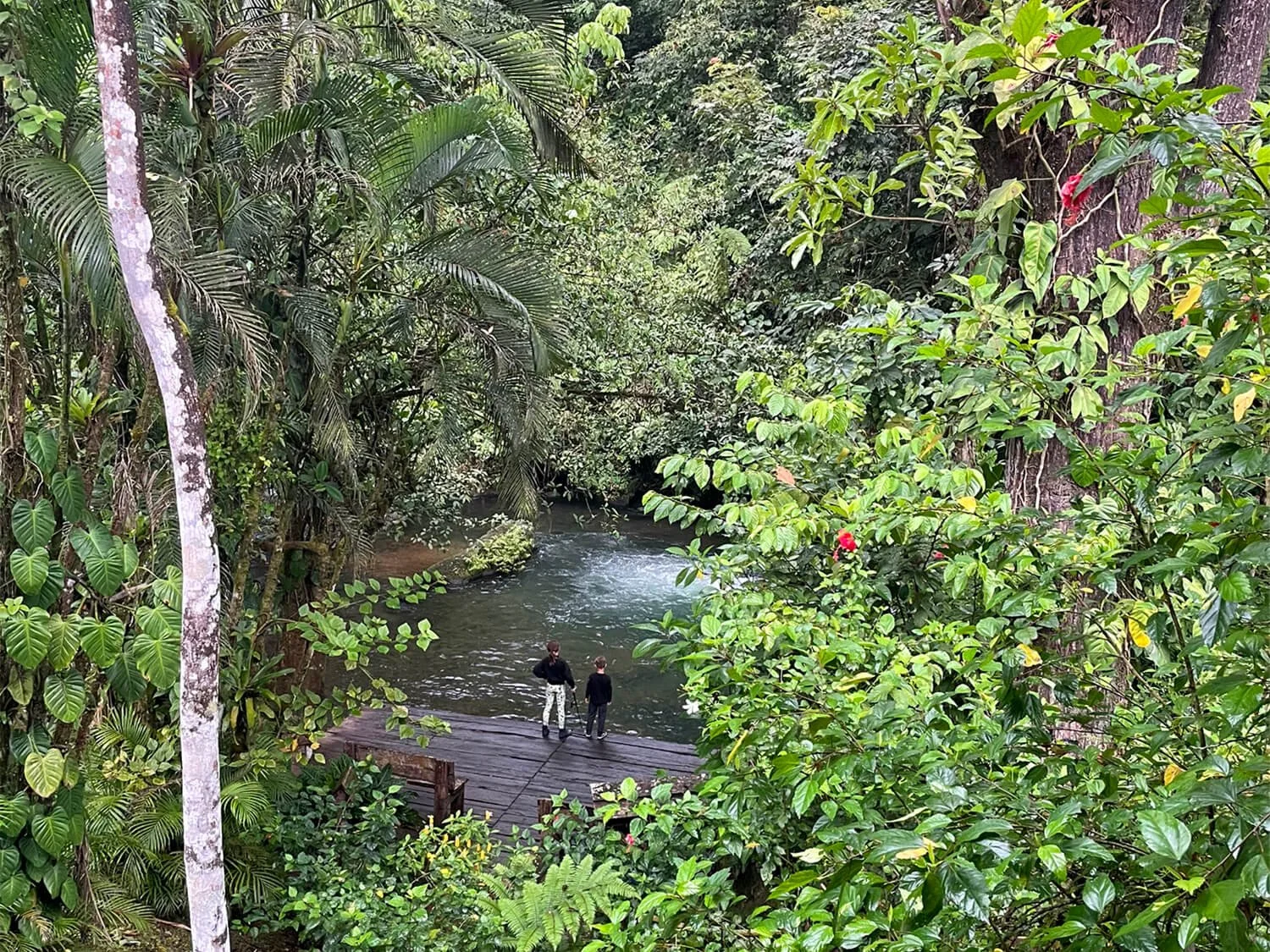
We lived, I mean really lived, in Costa Rica for two months. The kids played outside, in the dirt, with no toys and only their imaginations to hold them back. We worked in the mornings and spent afternoons adventuring. We gathered with new-found friends for sunsets on the beach. We were all more relaxed and balanced.
When it came time to return to Toronto, we toyed with the idea of staying on in Costa Rica. We decided to return to Canada, get things in order, and make a plan to return in the winter.
The turning point.
On a two-day layover in Miami, we woke up that Saturday morning — after thousands of dollars in rushed PCR tests to allow us into Canada — to the news of a pending lockdown.
At that moment, we decided to ‘F’ it all and reroute back to Costa Rica! We had no home, no school. I knew I would likely lose my job, but it didn’t matter. We changed our flights, broke the news to our disappointed families and flew back to Costa Rica.
Those initial months of transition were tough. Adjusting to school, the kids needing to learn Spanish.
We had to find a house, car and a job for me.
But we did it.
And — we took it a step further and decided to sell our Toronto home without returning to Canada.
We hired a company to pack up our home into a container and ship it to Costa Rica.
For that first year, we did not return to Canada once. And we lived in bliss in Costa Rica. Kids in school.
Adventuring on the weekends. Building a community of lifelong friends. Enjoying the warm weather.
The sun rises and sets at the same time every day. Our bodies and minds adjusting to Pura Vida.
The transition.

The transition was not without its challenges. The first year was hard for the kids — from a language perspective.
My son, being only four at the time, faced many kids in his class who spoke only Spanish.
But with the support of tutors and myself speaking enough Spanish to get by, the kids adjusted. They are fluent now.
We could not imagine life outside Costa Rica now. We live in a village.
Unless you are willing to pay double to ship it here from the US and wait a few weeks to get it, Amazon doesn’t exist.
There’s no Uber Eats. Life is slower. Everyone knows each other.
There is always a kid to play with or a friend to talk to. I love the social aspect. You are social and outside every day.
We spend entire days and nights outside.
No devices, no technology. The kids find a friend to play with wherever they are. They can run free. Someone is always looking out for them.
And with most of our community being ex-pats, we have friendships like we never had in Canada. I would do anything for any of them, and I know they would do the same. Pick each other’s kids up from school, and come over at 3 am because you must rush to the doctor in the middle of the night. Bring things back for each other on our trips back to North America. It’s a village. We are grateful and honoured to be part of it.
As for Costa Rica, we have seen immense growth over the three years we have been here, especially in the area we live in — Playas Del Coco, Guanacaste. Major development, new hotels and communities, and a mass exodus from North America. Costa Rica is the new American Dream — of the slower life, less bad influences for our kids, less consumerism, and health and wellness.
Q2. Describe a day-in-the-life in Costa Rica.
Family time.

We both work Toronto hours so we wake up early — 5 am — with the monkeys howling in the trees and the birds chirping.
We make breakfasts, pack lunches for the kids, and get them ready for school.
I am grateful to have found someone who drives the kids to school at 7:30.
Most days, we need to be in meetings by then, as 7:30 here is 9:30 in Toronto.
Our kids head off to school, caring for their animals on the property or the garden, and we start work.
My husband usually spends the day on meetings, and I head to a workout class or for lunch with a friend.
I am interested in my next move, so I am meeting with people in my network to brainstorm ideas.
We are building a property here, so a part of our day usually involves checking on that.
We pick up the kids from school.
Then, we have an early dinner and get them off to an evening class like ju jit su. By 7, we’re ready for bed.
We all sleep early — like I mean 8 or 9 pm at least during the week.
Sunsets on the beach.
Fridays, we do sunset at the beach. It has become a tradition.
And we meet up with other families — whoever can make it.
We sometimes light a bonfire and have marshmallows for the kids.
We catch up on the week, take in the sunset, watching the kids run around getting covered in sand.
Everyone is welcome. Come as you are.
Q3. How has this move impacted your work-life balance and overall lifestyle?
We finally do have balance. It is so different from the grind in North America that it’s hard to explain.
People love life here. Pura Vida. We work. But we don’t exist to work.

Q4. How has living in Costa Rica changed your perspective on life?
Oh, it has changed everything. It has taught us to take risks.
To be adventurous. To appreciate the little things. To live with less.
To embrace new cultures. To put ourselves out there. To love nature.
We are a closer family unit. We depend on each other here.
We spend more real quality time together. We don’t worry about money. We worry about living life fully.
Q5. What cultural differences have you noticed?
It was hard in the first few years of us being here because I was working for a Canadian company. The original job I had when we decided to stay forced me to resign — which was a blessing in the end.
I found another remote job for a Canadian brand that was very supportive of my living abroad. Though everyone knew I was in Costa Rica most of the time, I tried to downplay it. Wearing long sleeves on my Zoom meetings, not posting about our weekends on social media.
Authenticity.
The hiding was difficult for me. I felt I was not embracing life here. When I left that Canadian job only recently, I embraced Costa Rica life. Spending time focusing on myself, how to improve this place and what to do next.
The workplace here is very different from that in North America. Everyone — I mean everyone — takes a long lunch. The entire country practically shuts down one hour from 12 - 1 pm. They work hard, but they also stop working when work is done.
They don’t take it home with them. They enjoy their life. They are working to live, not living to work.
Q6. Have you found it easy to integrate into the local community?

We came at the right time, along with many others.
The flock of North Americans made the move at the same time for the same reasons.
This helped us to build our community. We met many friends through our kids’ school.
We also chose to live in a gated community, where we met many other families — at the beach club, sports complex, and pools.
And we also have a lot of Costa Rican friends.
There is a beautiful, well-woven small community where we are.
One that is likely repeated in every small town dotting the coastline.
Q7. Have you enjoyed participating in any cultural events or traditions?
Costa Rica is very traditional. They are Catholic, and those holidays and traditions are very important to them.
We have loved being part of the local parades and fairs. Seeing the costumes and music. They will take any reason to gather and celebrate.
My kids live for the little fair that comes to town once a year.
It has a small ferris wheel and bumper cars — straight from 1995.
Simple and so fun.
Also, you have to be into bullfighting here — or at least pretend you are. It’s in their DNA as much as football.
Q8. Can you share some memorable experiences?
The good and the not-so-good.
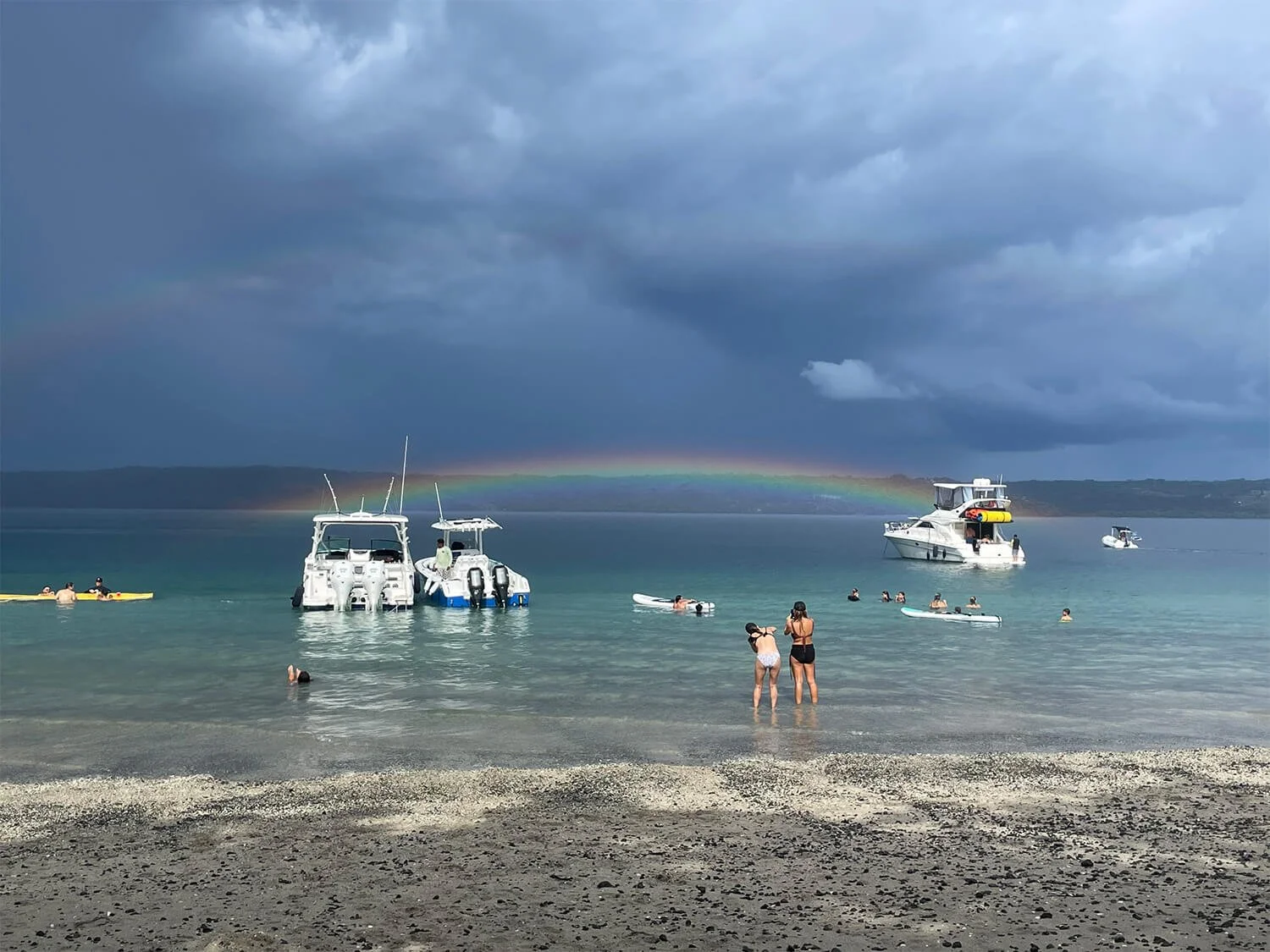
There are too many to count. For the first year, everything was a first.
I will never forget the early days of our trip here.
Our new friends who had so kindly taken us under their wing invited us on the boat for the day.
I thought this was some luxurious yacht, dressed to the nines, platform shoes, big sunhat, and straw bag.
We show up on the beach only to see a little dinghy pulling up on the shore.
The tiny boat you take to the bigger boat. Off went the shoes, the big hat.
Then the sundress, now soaked with the many attempts it took to hop on the ship before a wave came in.
The bigger boat took us to another, more secluded beach. There were no dinghies there.
No, you had to swim to shore.
We arrived sprawled on the shore, soaked and dishevelled.
There are also days when Costa Rica kicks our butts.
Those days are when you need to go to the bank.
Technology has yet to catch up to this country.
You need money — to take it out or to deposit it — you wait in line to speak to a teller.
Sometimes, that line can be hours long.
I will never forget a day when I waited a gruelling 3 hours while watching a woman holding a huge sack in front of me. Upon her turn, she hoisted that sack onto the counter and emptied thousands of coins — colones.
The teller proceeded to count — by hand — every single coin.
There are no counting machines or coin rollers here. Just two tellers are counting and recounting.
I swear I watched this with my mouth open, stunned for the next hour before it was finally my turn.
And no one around me seemed phased for one second.
Q9. What are some of your favourite activities in Costa Rica?
I love how active it is here.
It’s almost a competition to be active.
I go hiking or walking in the early morning. Mountain biking. Surfing. Pickleball or tennis.
My day consists of something active every day.
Pickleball, anyone?
A workout or yoga class, pickleball, hike.
There is something for everyone.
Most of our leisure time is spent doing active things — even if it’s just a beach walk.
Q9. What have been some challenging or negative aspects?

The lack of conveniences.
Though it’s also a blessing, it can be annoying not to have a next-day Amazon order.
We are away from our families. This is always difficult.
Though it has helped me to build independence and forced our family unit closer, we miss them.
We miss the time they would have with the kids.
We make a point to go back or have them come here a few times each year — with lots of FaceTime calls, too.
Oh, and it’s HOT here. I mean, super hot. We are in Guanacaste, which is a desert.
Clothing is skimpy. And casual. You do not need heavy items.
Even T-shirts are too hot. I live in workout clothes, loose sun dresses, and bikinis—no high heels. Maybe one platform shoe, but you will likely never wear it.
Bring lots of bathing suits — you can never have enough.
A move like this is a risk. It requires a person who is prone to wanting adventure.
You have to be willing to roll with the punches.
And, have a plan for how you will earn money — either here or abroad.
The rest is easy.
Q10. What advice would you give someone looking to simplify their life or work remotely from a tropical destination like Costa Rica?
Just do it. Come and try it. The rest will figure itself out.
Q&A.
The Practicalities: aka ‘The Boring Stuff’
-
Being Canadian, the toughest part has been living in US dollars. The exchange rate can be difficult. And everything in Costa Rica is cash. Especially for foreigners, until you receive residency, there is no lending here. So you want a car — you pay upfront in cash. And cars are expensive. Import taxes are typically 50% of the value of the item. So that Jeep that might be $60k Canadian is USD 120k — cash. You want a house — there are no mortgages. You pay in full — cash.
In terms of visas, North Americans can now travel freely for 180 days on a travel visa. This means you can stay in the country for six months before having to leave. Worth noting: If you plan to drive with a foreign license, your license is only valid for 90 days. So you need to leave every 90 days to stamp your passport. Many choose to drive the two hours from where we are to Nicaragua and return the same day to extend their visa.
Residency is easy to apply for. You need to own property worth over $150k, or you can apply for it on a retirement or investment basis. Typically, the residency approval process takes 1 to 2 years. Once you are in the process, you don’t need to leave the country except to keep your driver's license active.
Once you receive residency, you can access health care, work in the country, get a local driver’s license. You do not need to leave for visa stamps.
You can hold residency in Canada or the US and Costa Rica at the same time.
If you are Canadian, you can choose to leave your tax residency in Canada. This means you forgo your OHIP while living in Costa Rica.
Many ex-pats continue to work remotely for North American companies. You can conduct your work from anywhere as long as your company is okay with it. And if you choose to leave your Canadian tax residency, you can ask your Canadian organization to pay you without source deductions.
-
As mentioned, the cost of living is high because we are Canadian and live here in USD.
Imported items cost a lot. That’s why it’s best to bring things with you in suitcases and shop in North America if possible.
Housing prices can vary. You can rent or buy in a gated community with many amenities for more or live more rustically for less.
Either way, Costa Rica is very safe. Petty crime exists, but generally, the people are friendly and trustworthy.
Getting a bank account in Costa Rica and transferring funds into it for everyday use is not difficult. Taking cash from a North American account can be expensive, especially with the exchange rate and bank fees.
And everything is cash here. You want fruit off the side of the road — cash. You want spa services — cash. You want a class at the gym — cash. So be prepared to always have either USD or the local currency — Colones — with you.
-
We are so grateful for the health care here. It is affordable and amazing. Early in our stay here, we contracted covid — a bad case. The doctor from the town showed up at our house with the positive test results, vitamin IV drips, Ivermectin and several other medicines. He came to our house every day for three weeks to check on us. At one point, alone with our kids and a husband who was not getting better, I called him in a panic. He came, threw my 180-pound husband into the pool and said, ‘You have a family who needs you. It’s time to change your mindset and beat this thing.” I swear he kept him alive. I can’t even think about what would have happened if we were in Canada and that sick.
Health care her is among the best in the world. My husband has had two significant surgeries here with world-class, Harvard-trained doctors. Private health care is very affordable. There are medical advancements here far above that of North America and all the red tape does not bind them. We have had stem cell therapies, surgeries, and functional medicine treatments. There is a focus here on holistic healing. Antibiotics are prescribed with probiotics, vitamins and mindset coaching. And you have direct access to doctors. I would speak to my husband’s surgeon 24/7. Months later, he still messages to check in.
-
You don’t need much other than good internet. And a plan B for when the internet goes down — like a local cafe :)
I only came with my laptop. There is good internet in most places now — fiber and satellite. It can be expensive to keep your Canadian phone plan. My husband chooses to keep his Canadian number for work and pays $15 a day for roaming. I switched to a Costa Rica SIM card — everyone is on WhatsApp here.
My husband has a remote studio here where he teaches. He has shipped way more equipment here over the years. It is all available here too — for a higher cost. You can travel to San Jose and find pretty much anything you need
-
There are some excellent co-working spaces here worth taking advantage of.
-
All the local towns here used Facebook groups to connect. Finding your local Facebook groups and checking in will be helpful. Everyone is willing to answer questions and provide info.
-
The language barrier can be a challenge. Knowing Spanish would definitely make things easier.
In our area, most speak English. Many live here without knowing a word of Spanish — including my husband.
But that can be frustrating.
-
We bought a buggy. A CanAm which is like a four-wheeler, but it has four seats.
We enjoyed puttering around on it. No windows or doors. We would go on off-roading trips with the kids to waterfalls and beaches. It was fun.
But ultimately, we sold it in favour of a second car — better in the rainy season.
-
I wish I had brought more stuff from Toronto. Like sunscreen — which is very expensive here — or certain snacks you can’t get here.
-
There are always going to be a thousand reasons not to do it.
But you won’t know how much it will change you until you do, especially if you have children.
Everyone we know here will echo that this has been their best decision ever, especially for their kids.
Conclusion.

A huge thank you to Leya and her family for sharing their beautiful story.
Their move to Costa Rica has inspired us all to live the life we want.
The takeaway? Living A well-designed life means understanding your true values and vision.
Lifestyle Design — like all design — first involves defining the problem.
Next is researching, brainstorming, and then testing your solution.
The challenge is to work around any obstacles, pivot when needed, and focus on the goal.
Everything is possible. Often, it’s about taking that first step.
Remember, you are the creative director of your life — so, carpe diem!
Success favours the brave!